A knit dishcloth is a small cotton cloth for washing dishes and wiping counters. It's reusable and goes in the laundry. But is it really cleaner than a sponge? Only if you take care of it.
What a Knit Dishcloth Is Good At
- washing plates, glasses and cutlery;
- wiping counters and the table;
- getting into the corners of cups and jars;
- gentle scrubbing. The knit texture grips a bit better than a flat cloth.
When You Need a Scrubber Instead
For baked-on cheese or a burnt pan, a cloth isn't enough. Use a brush, a scraper or a dish scrub cloth with a rougher side. Many people keep both: a cloth for daily dishes and a brush for the tough stuff.
Dish Cloth vs. Sponge: The Hygiene Question
Sponge
Sponges get a bad name, and they've earned some of it. A German study of used kitchen sponges found 362 kinds of bacteria, and microwaving killed only about 60% of them. The researchers suggested replacing sponges weekly.
Knit dishcloth
Cloths aren't magic either. Dishcloths are not any more hygienic than sponges on their own. Bacteria grow on anything warm and damp. A smelly cloth is a sign it's time to wash it.
The real difference: a cloth can go through a hot wash and dry fully. A sponge mostly can't. That's why a cloth can be cleaner, if you actually wash it often.
How to Care for a Reusable Dish Cloth
- Rinse and wring it out after every use.
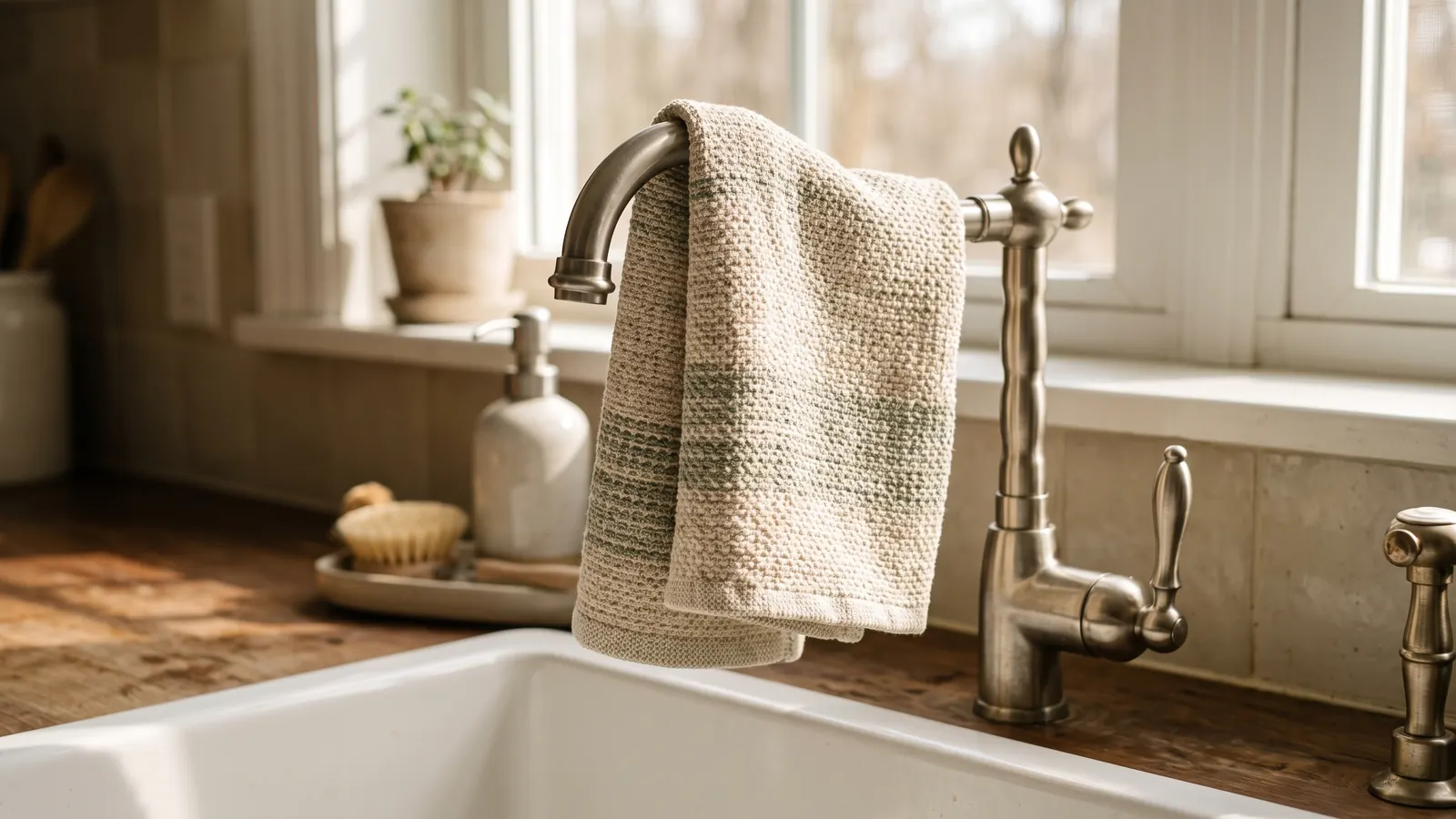
- Hang it to dry. Over the faucet or a hook, not in a ball in the sink.
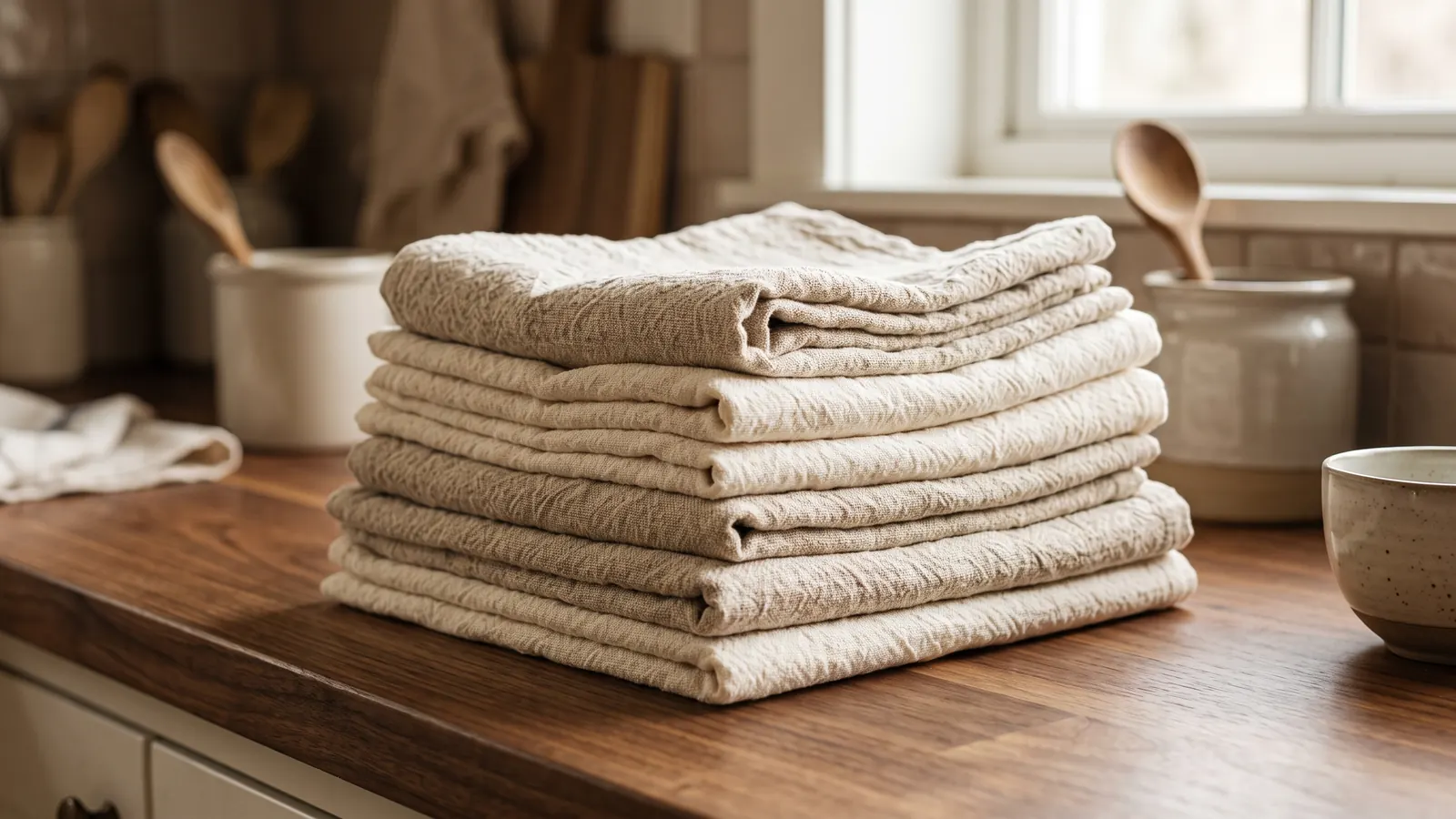
- Swap for a fresh one every day or two. Having 5-7 cloths makes this easy.
- Wash on hot and dry completely. Michigan State University Extension recommends the hot cycle and a full dry on high.
- Keep separate cloths for raw meat spills, or use a paper towel for those.
Signs It's Worn Out
- a smell that stays after washing;
- stains that won't come out;
- holes or thin spots;
- it feels stiff and doesn't absorb.
Is It Worth Switching?
If you like less waste and don't mind doing a little extra laundry, yes. Cotton cloths last a long time. If you won't wash them often, a sponge you replace every week or two might be easier.
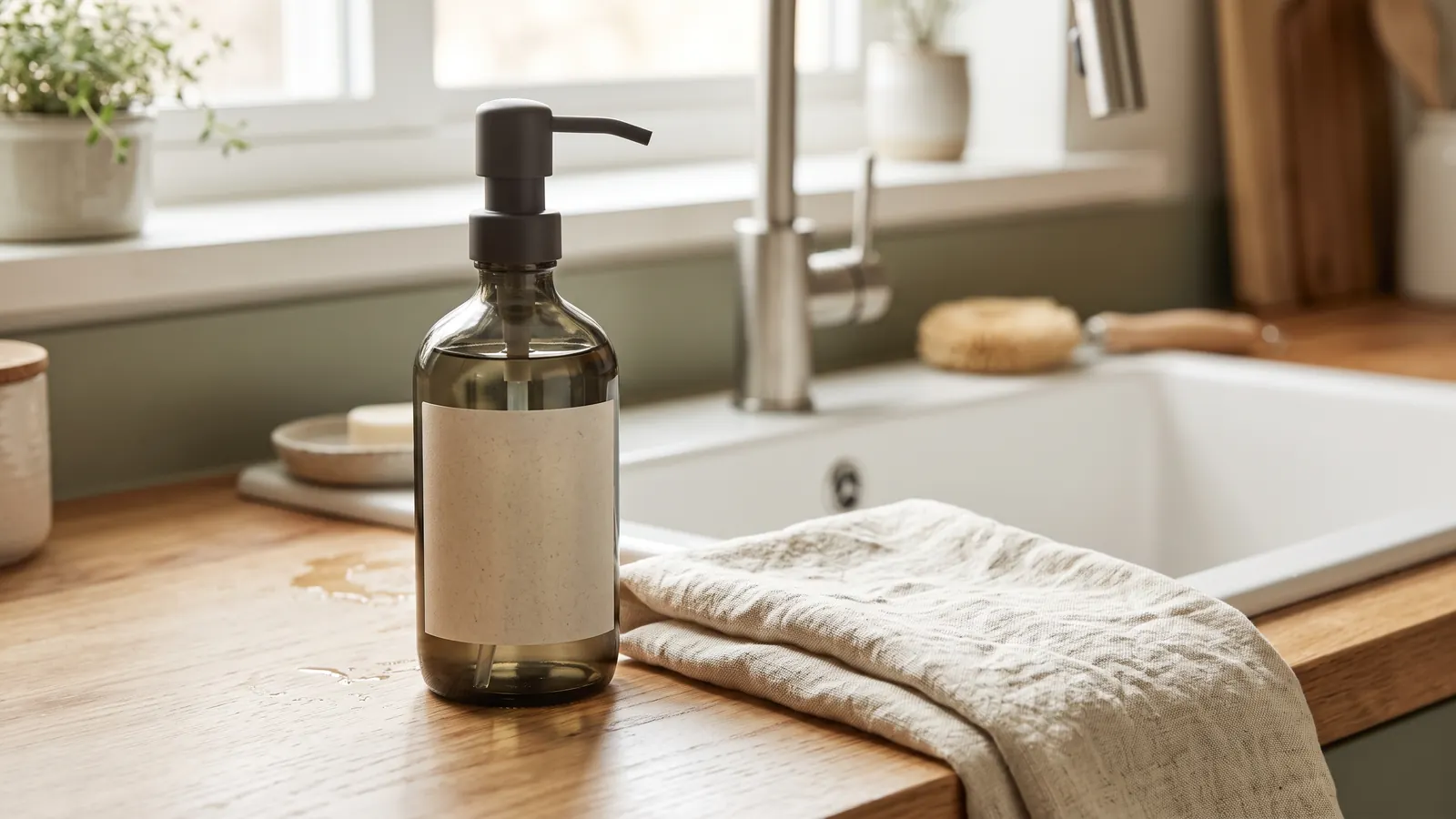
Pair your cloths with a good dish soap and a lint-free cotton tea towel for drying.
What to look for
- Good for: plates, glasses, cutlery, counters and gentle scrubbing.
- Not enough for: baked-on messes - keep a brush or scrub cloth on hand too.
- Hygiene: neither cloths nor sponges are automatically cleaner; what matters is washing and drying often.
- Care: rinse and wring after each use, hang to dry, and wash hot with a full dry cycle.
- Rotation: keep 5-7 cloths so you can swap in a fresh one every day or two.
- Replace when: it smells after washing, stains won't come out, or it has holes or thin spots.
FAQ
- Is a knit dishcloth more hygienic than a sponge?
- Not automatically. Neither is inherently cleaner. The advantage of a cloth is that it can go through a hot wash and dry fully, which a sponge mostly can't, so a cloth stays cleaner if you actually wash it often.
- How often should I replace a dishcloth?
- Swap in a fresh one every day or two, which is easier with 5-7 cloths in rotation. Replace it entirely once it smells after washing, has stains that won't come out, or develops holes or thin spots.
- Can a dishcloth handle baked-on food?
- No. For burnt pans or baked-on cheese, use a brush, scraper or dish scrub cloth with a rougher side. Many people keep a cloth for daily dishes and a brush for tougher jobs.