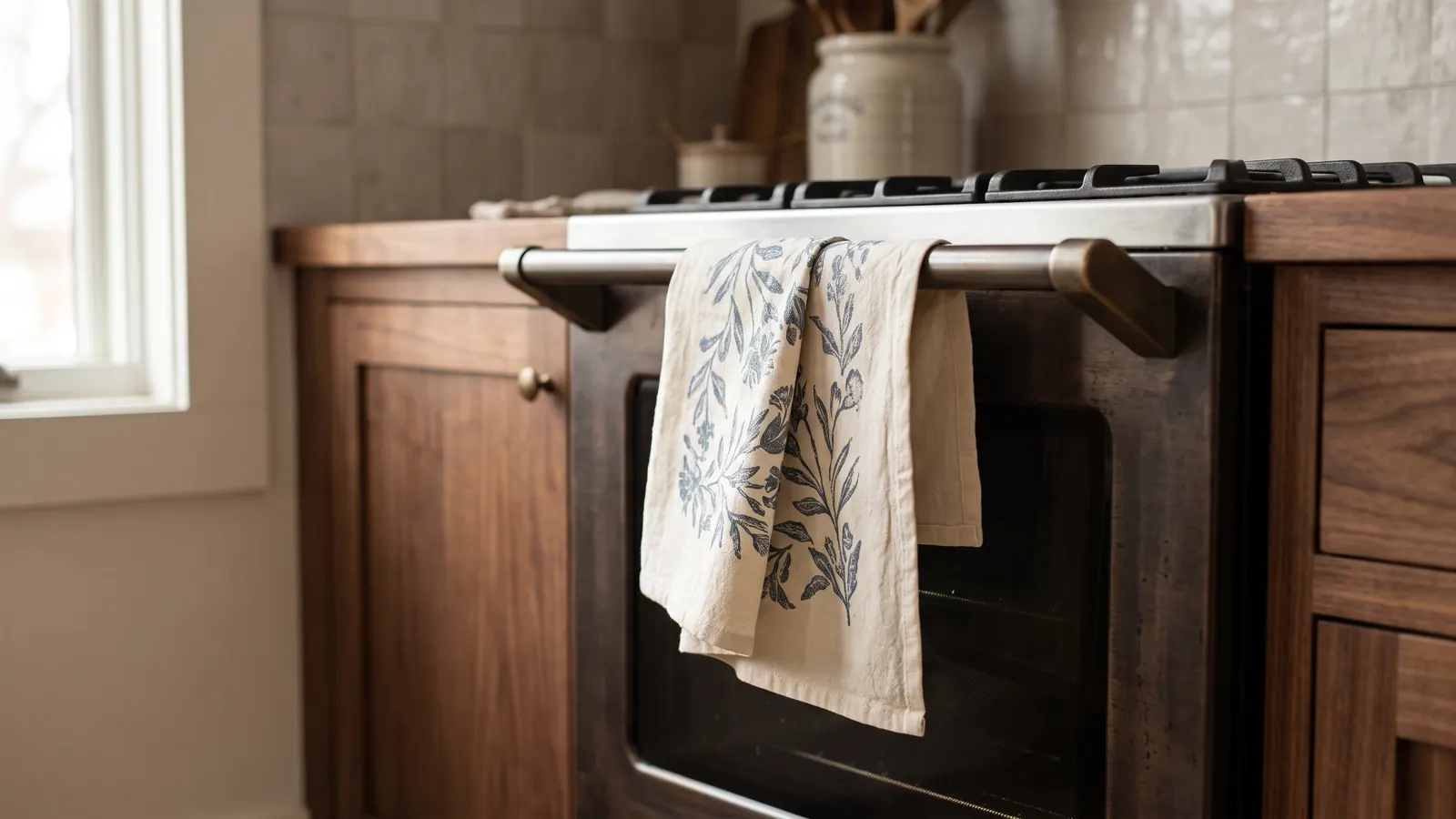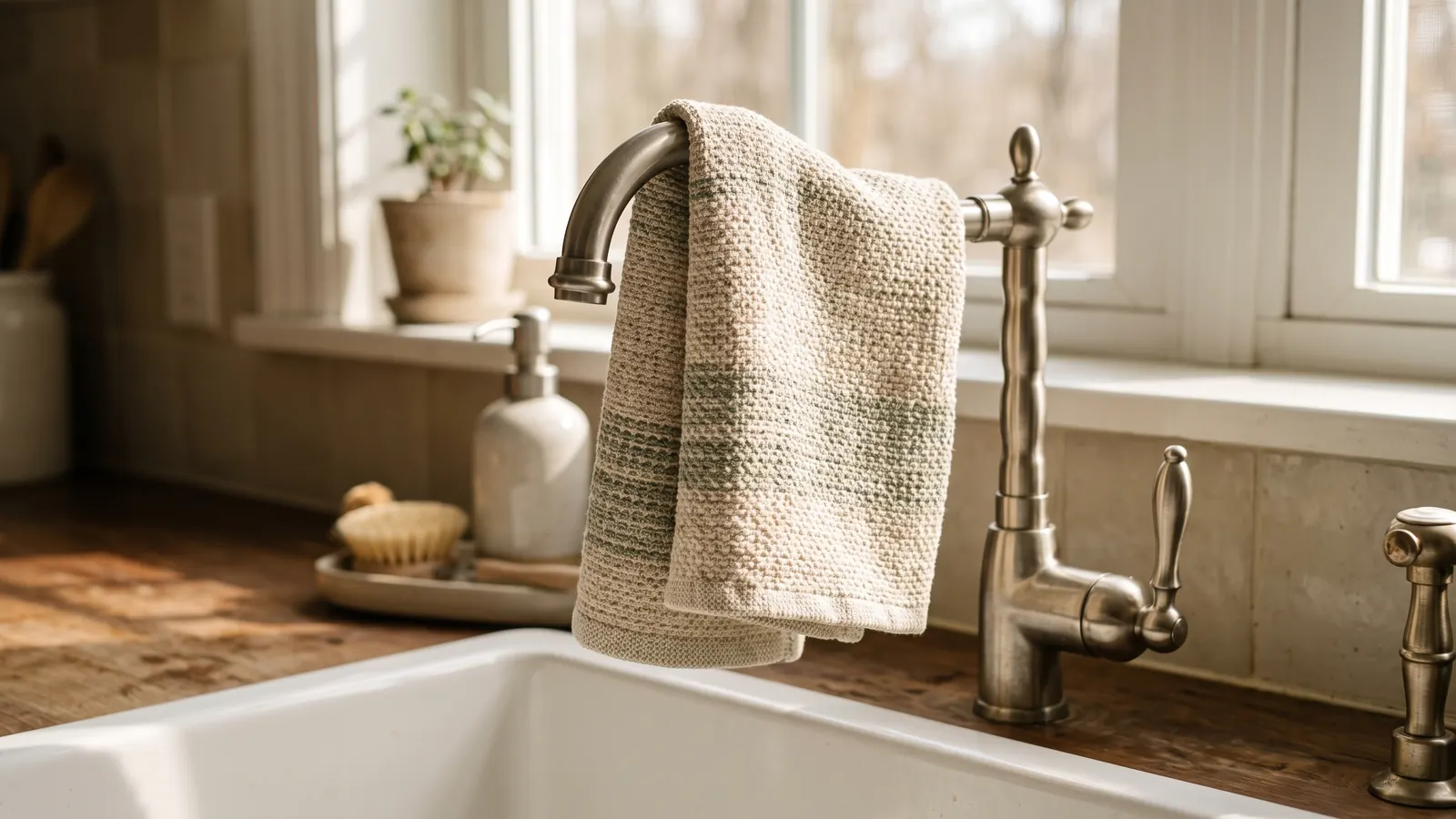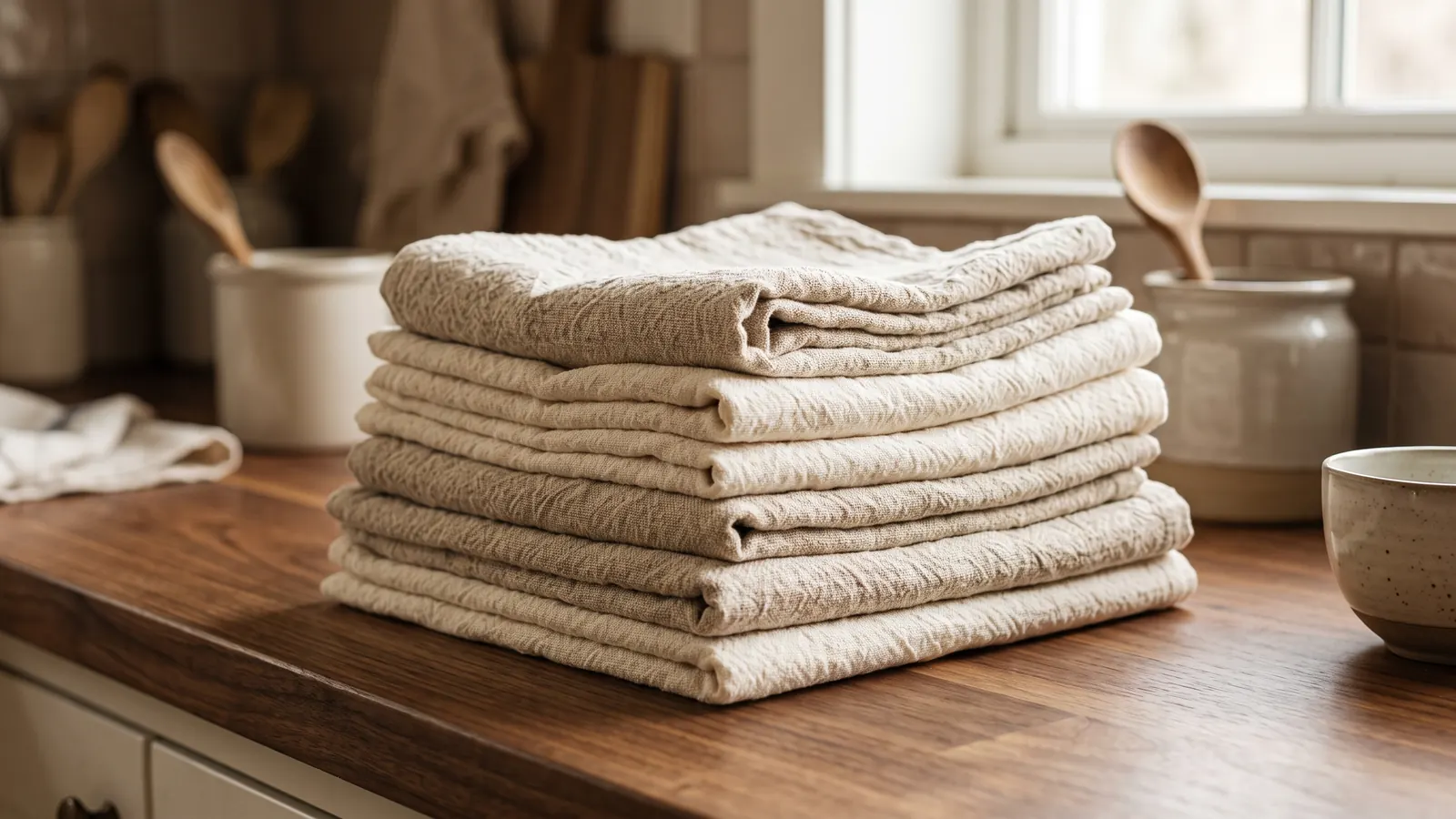
"Cotton tea towel" can mean three very different cloths. A thin flat one, a bumpy waffle one, or a thick fluffy one. Each is good at something different.
The Three Main Types
| Fabric | What it is | Best for | Weak spot |
|---|---|---|---|
| Flat weave / flour sack | thin, tightly woven cotton | glasses, dishes, covering dough | holds less water at once |
| Waffle weave | honeycomb texture | dishes, hands, quick drying | bulkier; prints look less sharp |
| Terry | looped, like a bath towel | hands, big spills | leaves lint on shiny things |
For Glasses: Flat Weave or Flour Sack
Flour sack towels use a tight flat weave that's lint-free. Terry's loops shed fibers onto polished surfaces. So for wine glasses, go flat. Linen is even better for glass, but it's not cotton and costs more.
For Everyday Dishes: Flour Sack or Waffle
Both work. Waffle weave's raised pattern adds surface area, and it lets air through so it dries quickly. That helps in a busy kitchen where towels stay damp.
For Hands and Spills: Terry or Waffle
Terry soaks up the most water. Lint doesn't matter on hands. Keep one terry towel by the sink and use flat towels for dishes.
A Simple Setup
- 3-4 flat or flour sack towels for dishes and glasses;
- 2 waffle towels for quick jobs;
- 1 terry towel for hands.
What to Check Before You Buy
- 100% cotton or a blend? Polyester blends absorb less.
- Size: flour sack towels are often 24" × 24" to 28" × 28". Bigger is handier for drying a pile of dishes.
- Hemmed edges. They last longer and don't fray.
- Shrinkage. Flat cotton can shrink a little on first wash. That's normal.
- Care label. Read it before you buy, not after.
Washing Tips
- Wash before first use. New towels absorb better after a wash.
- Skip fabric softener. It coats fibers and makes towels less absorbent.
- Dry fully between uses so they don't smell.
Want something fun? See our picks of funny dish towels, which are flour sack cotton too. For washing up, pair them with knit dishcloths.
What to look for
- For glasses: flat weave or flour sack cotton, since it's lint-free.
- For everyday dishes: flour sack or waffle weave, both work well.
- For hands and spills: terry is most absorbent; lint doesn't matter there.
- Size: flour sack towels usually run 24" × 24" to 28" × 28".
- Edges: hemmed edges last longer and resist fraying.
- First wash: expect a little shrinkage, and skip fabric softener to keep absorbency.
FAQ
- Which tea towel fabric is best for drying glasses?
- Flat weave or flour sack cotton. It's tightly woven and lint-free, unlike terry, whose loops can shed fibers onto polished surfaces.
- What's the difference between waffle weave and flat weave towels?
- Waffle weave has a raised honeycomb texture that adds surface area and dries quickly, good for busy kitchens. Flat weave is thinner, lint-free and better for glasses, but holds less water at once.
- Should I wash a new cotton tea towel before using it?
- Yes. New towels absorb water better after their first wash. Skip fabric softener, since it coats the fibers and reduces absorbency.