Kitchen towels get used every day, but the details are easy to overlook. Does the fabric dry dishes well? Will that printed design still look good after washing? We write about tea towels and kitchen linens, from natural cotton towels to knit dishcloths, with practical advice for your own kitchen or a small gift.
Start with the job. A towel for drying glasses needs to absorb water without leaving much lint. A dishcloth should be easy to rinse and wash. And useful can still feel personal: a printed tea towel with a familiar place or a playful illustration can bring a little character to the kitchen.
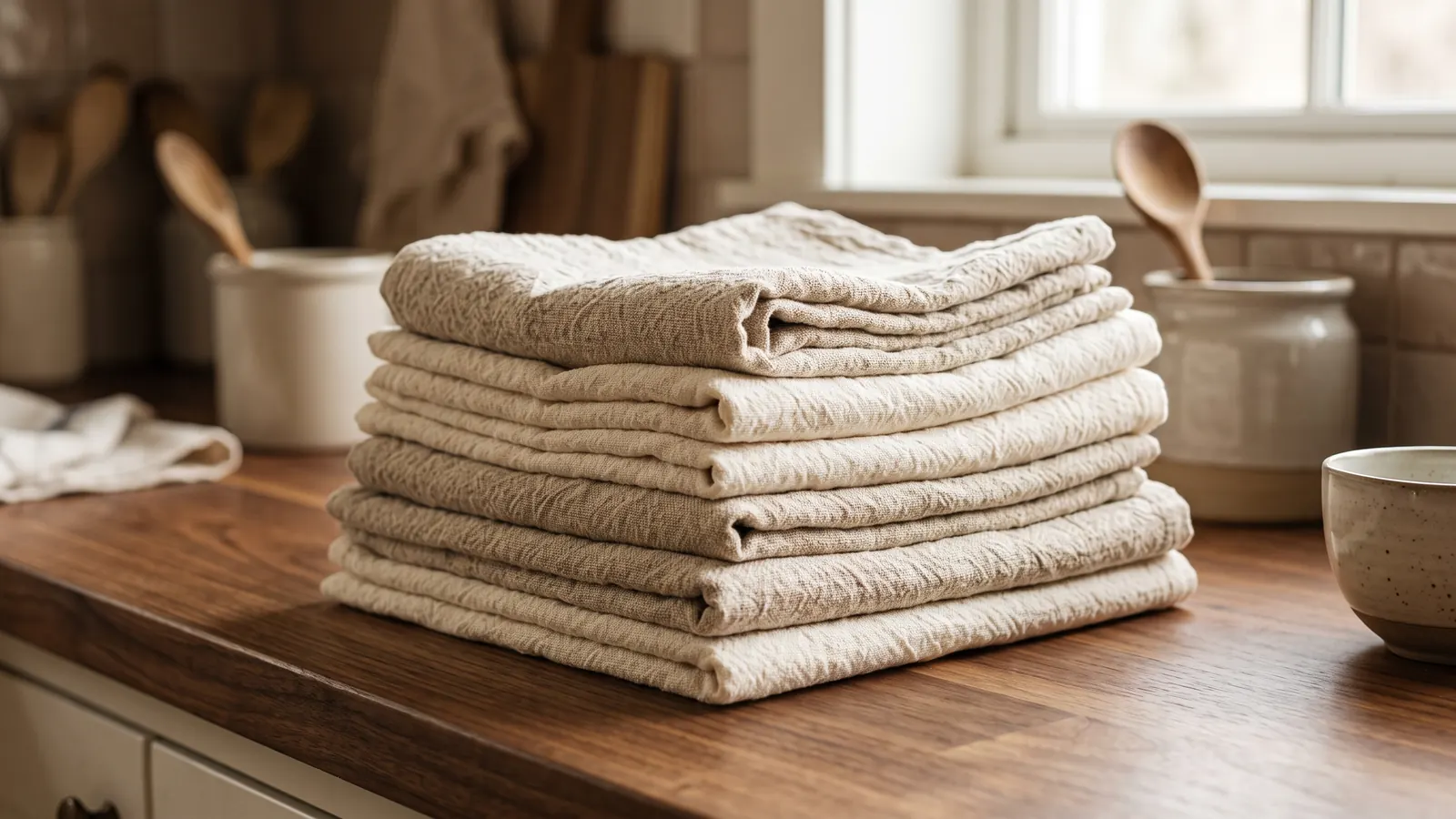
Fabric weave decides what a towel is actually good at. Flour sack cotton is thin and lint-free, which makes it the standard choice for glassware and polishing. A waffle weave has more surface texture and soaks up water faster, which suits everyday dish drying. Terry cloth is the thickest and most absorbent of the three, closer to a hand towel than a flat weave, and tends to hold up best for spills and countertops.
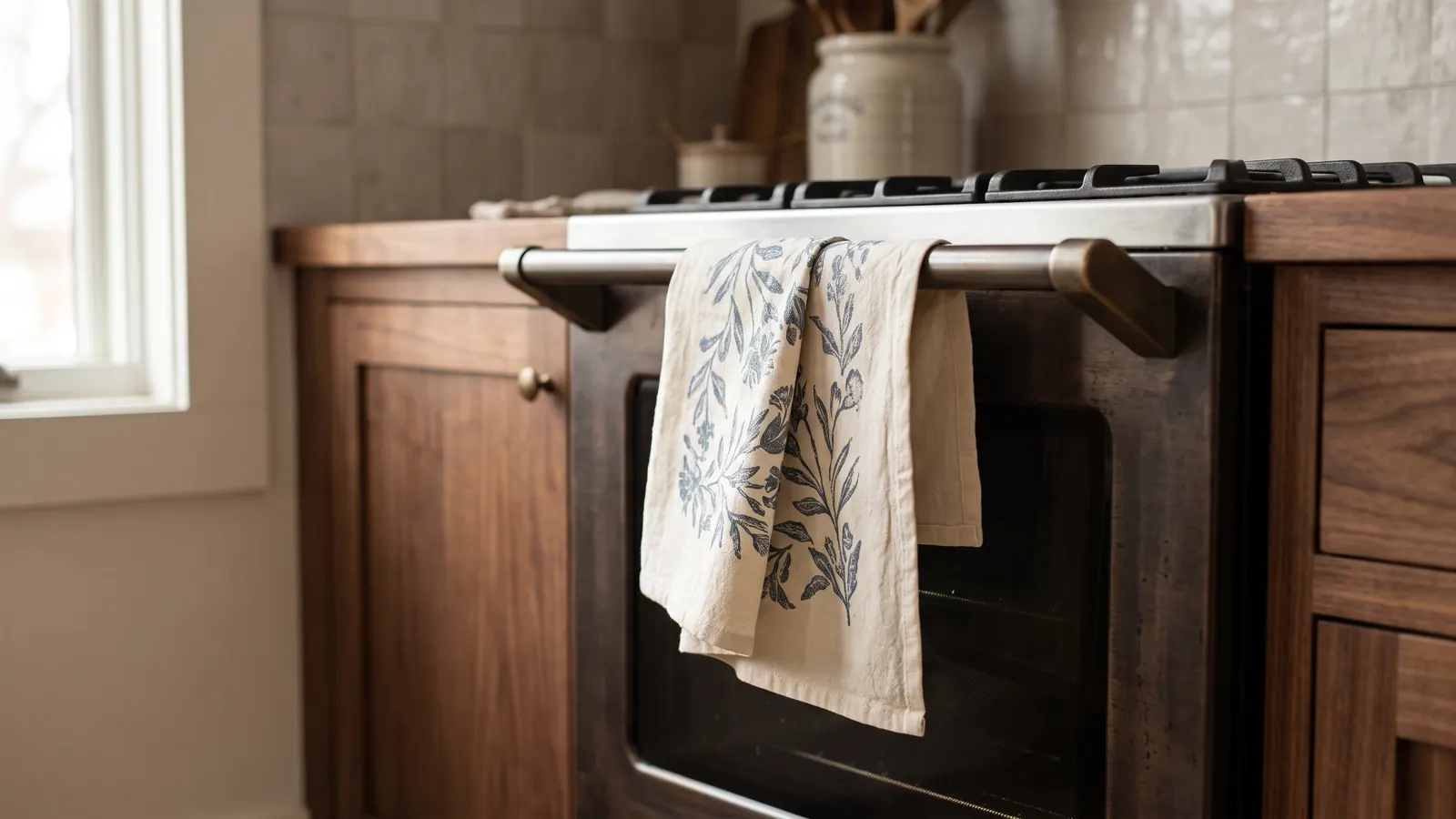
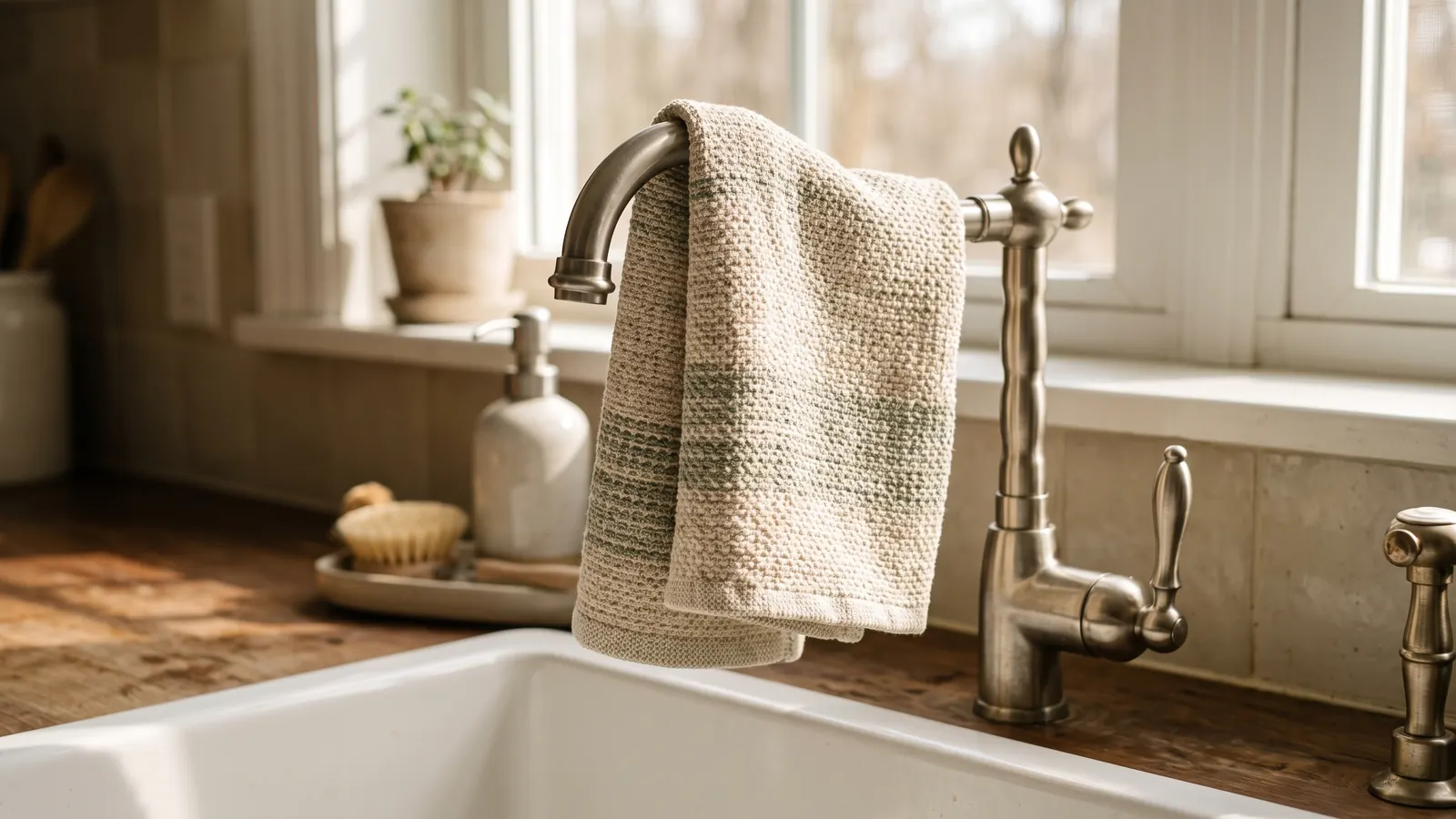
Printed towels bring their own trade-offs. A screen-printed design on flour sack cotton will fade a little with repeated washing, especially in hot water, so a towel meant to be kept as a gift or display piece often does better washed cold and air-dried rather than run through the dryer on high heat. For knit dishcloths, check whether the yarn is cotton or a cotton blend - pure cotton dries faster between uses, which matters for a cloth that lives by the sink.
Our guides below cover specific towels and cloths in more detail, including how particular fabrics and brands compare for everyday kitchen use.